Bolts and Bank Accounts: Modding Your Busa Without Killing Its Value
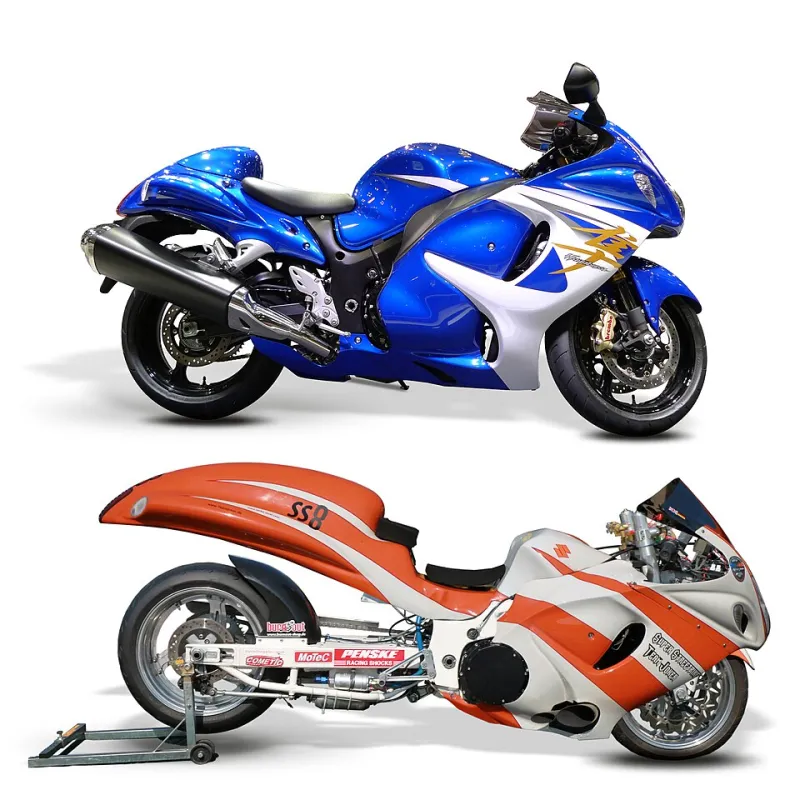
Photo: Auge=mit, CC BY-SA 4.0, via Wikimedia Commons
Every Hayabusa owner eventually stands in the same place: the bike is perfect, the warranty is fresh, and the parts catalog is calling. The question isn't whether to modify — it's whether the money you sink into the bike comes back out when it's time to sell or trade.
We've watched plenty of Busas cross dealer lots over the years, and the pattern is consistent. Some mods barely dent the price. Others can knock a grand or two off before you've turned a wrench. Here's the breakdown.
The Mods That Hold Their Value (Sort Of)
Let's be honest upfront: almost nothing you bolt on returns dollar-for-dollar. But a few categories come close enough that they're worth doing for yourself.
Bolt-on exhausts. A quality slip-on from Yoshimura or Brock's is the classic Busa move, and here's the trick — keep the stock exhaust in a box in the garage. When a buyer sees the OEM pipes included, the mod stops being a liability. Many buyers actually want the aftermarket sound, so a tasteful full system with originals included often sells at or near stock pricing.
Suspension upgrades. A professional revalve or a quality shock from the likes of Öhlins or Hyperpro is the most defensible money you'll spend. It's invisible, it improves the bike for everyone, and it signals the bike was ridden by someone who cared about handling, not just noise. Dealers we've spoken with during campaign events consistently say suspension work is the one mod that can actually help a sale.
ECU flashes and fuel controllers. This one splits down the middle. A clean, reversible flash from a reputable shop — with the stock map documented — is fine. A gutted, race-only tune with no paper trail is a red flag for any savvy buyer. If you flash it, keep the receipts and the before/after dyno sheets.
The Mods That Torch Resale
Cut frames, stretched swingarms, turbo kits. The drag-bike conversion is a legitimate passion and we respect it — but understand that you've built a bike for a very small pool of buyers. A stretched, lowered Busa might be exactly what one person wants and completely unsellable to the other ninety-five percent. If you go this route, plan to keep the bike or accept a steep discount.
Paint and bodywork. Custom airbrush work is deeply personal. What looks like a masterpiece to you reads like a repair bill to everyone else.
Cheap no-name parts. eBay crash cage, Amazon levers, unbranded fender eliminators. These don't add value, they subtract confidence. Buyers see them and wonder what else was done on the cheap.
Campaign Season vs. the Aftermarket: Run the Numbers
Here's where the current dealer landscape matters. When Suzuki runs accessory campaigns — and they do, regularly, especially around new model launches and spring sales pushes — the OEM parts pricing gets genuinely competitive.
Take a real example: a Suzuki accessory exhaust or windscreen package through a dealer campaign can land within 10–15% of aftermarket equivalents once you factor in labor. Add the fact that OEM accessories installed at purchase often roll into your financing, and suddenly the math shifts. A $900 dealer-installed accessory kit at 6% APR over four years costs you about $22 a month. The aftermarket version costs $850 cash today.
What OEM accessories do especially well is presale value. A Suzuki-logoed accessory on a Suzuki bike reads as factory-plus, not owner-experiment. Aftermarket parts, even excellent ones, always require explanation.
A Simple Budget Framework
- Cap total mods at 10–15% of the bike's value if resale matters at all. On a new Busa, that's roughly $2,000–$2,800.
- Prioritize suspension first, exhaust second, everything else never — unless the mod solves a problem you actually have.
- Box and label every stock part. This single habit is worth hundreds at trade-in time.
- Document everything. Receipts, dyno sheets, installer info. A folder of paperwork turns "modified" into "professionally maintained and upgraded."
- Time your purchases to campaigns. Dealer accessory promos typically run alongside the bigger sales events, so if you're buying a new Busa anyway, negotiate the accessory package as part of the deal rather than paying rack rate later.
The Bottom Line
The Hayabusa is one of those rare bikes that holds a loyal following, which gives modded examples a fighting chance — as long as the mods are reversible, documented, and tasteful. Spend on what makes the bike better to ride, keep the original parts, and let the next owner decide whether they want your exhaust note or their own.
Your wallet and your trade-in quote will both thank you.